In a nutshell
- The weather on the peninsula is overall quite good throughout the year, but it can change quickly, so a flexible plan is a good idea, especially in winter.[1]
- The full-day tour from Reykjavik starts from US$145 per person and runs 11 hours, with 28 drop-off locations listed at the end of the day.[2]
- Reserve now and pay later, and cancel up to 24 hours in advance for a full refund on the tour booked from this site.[2]
- Coastal wind is what makes Snæfellsnes feel cold. A waterproof shell, a warm midlayer, a hat and gloves do more than one heavy coat.
- Waterproof boots with grip for pebble beaches, wet lava paths and the easy coastal trail near the Bardur statue in Arnarstapi.[3]
- Top choice Snæfellsnes Full-Day Tour from US$145 Duration11 hours[2]Guide languageEnglish[2]Rating4.72 from 3,765 reviews[2]PickupCheck availability for pickup options[2]CancellationCancel up to 24 hours in advance[2] Check availability
- Premium Minibus Tour from US$161 Duration11 hours[4]Guide languageEnglish[4]Rating4.77 from 789 reviews[4]PickupCheck availability for details[4]CancellationCancel up to 24 hours in advance[4] See this tour
- Peninsula and Kirkjufell from US$138 Duration12 hours[5]Guide languageEnglish[5]Rating4.60 from 478 reviews[5]PickupCheck availability for details[5]CancellationCancel up to 24 hours in advance[5] See this tour
Join our whale watching Snæfellsnes tour from Ólafsvík and experience these amazing whales in wild nature.
Is a full-day peninsula tour worth it in any season?
Things to check
- Check availability for pickup options and starting times before you commit to a date
- Tour listings show from-prices in US dollars, so compare like with like
- Read the forecast for wind, which is what makes this coast feel cold
- Check the sunset time for your dates so you know how much daylight the day has
On the tour day
- 28 drop-off locations are listed, so pick the one closest to where you are staying[2]
- Cancel up to 24 hours in advance for a full refund, and reserve now and pay later[2]
- Live tour guide in English on the full-day tour from Reykjavik[2]
- The day runs 11 hours, so eat a proper breakfast and carry your own snacks[2]
Choosing your month on the peninsula
The Snæfellsnes Peninsula runs west from the ring road with the glacier-capped volcano Snæfellsjökull standing 1,446 meters high at its far end, inside a national park established in 2001.[6] In one afternoon you pass farmland, lava fields, sea cliffs, a glacier and small fishing villages. The climate here is coastal rather than continental. The weather on the peninsula is overall quite good throughout the year, but it can change quickly, so a flexible travel plan is a good idea, especially in winter.[1]
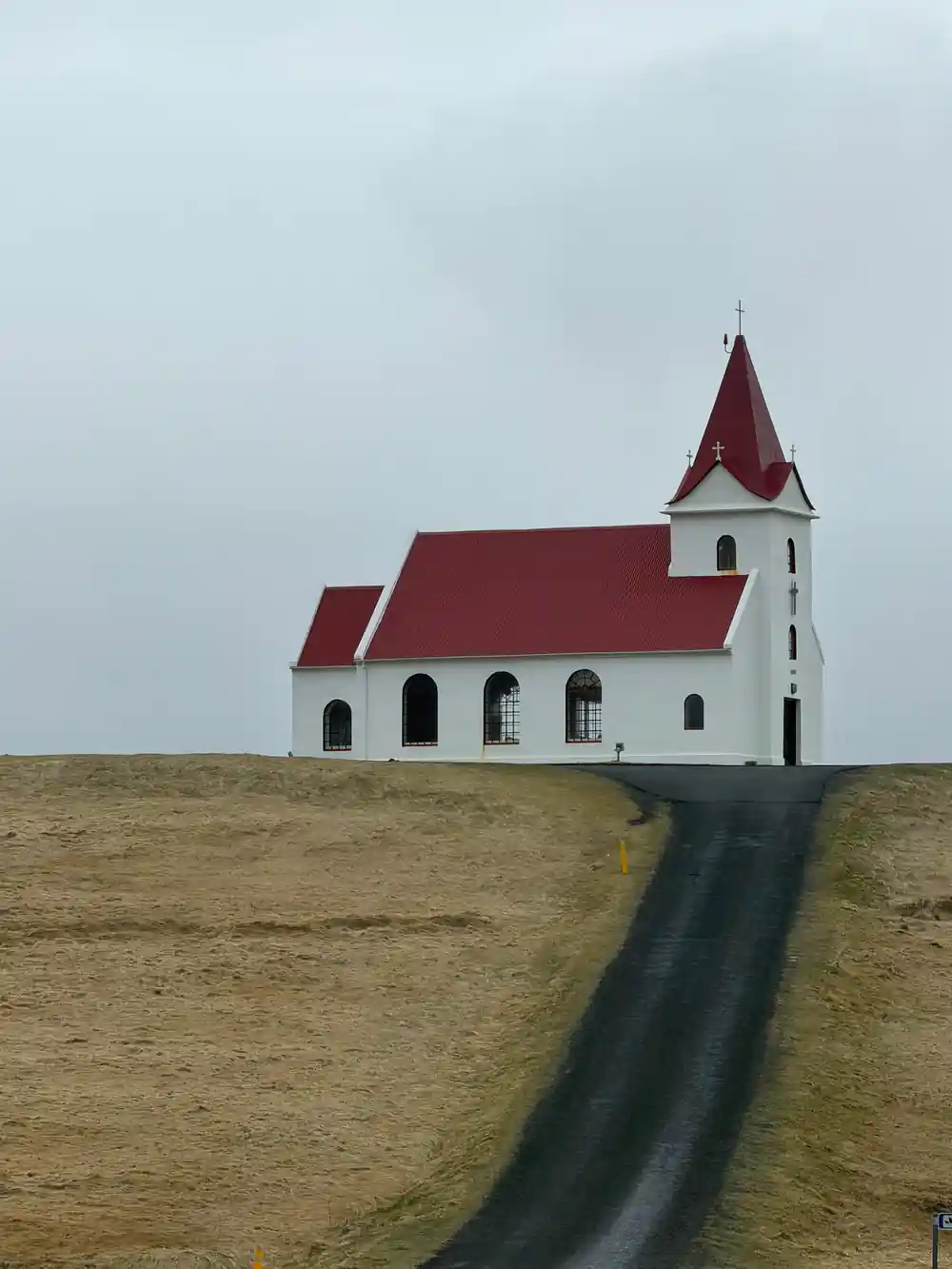
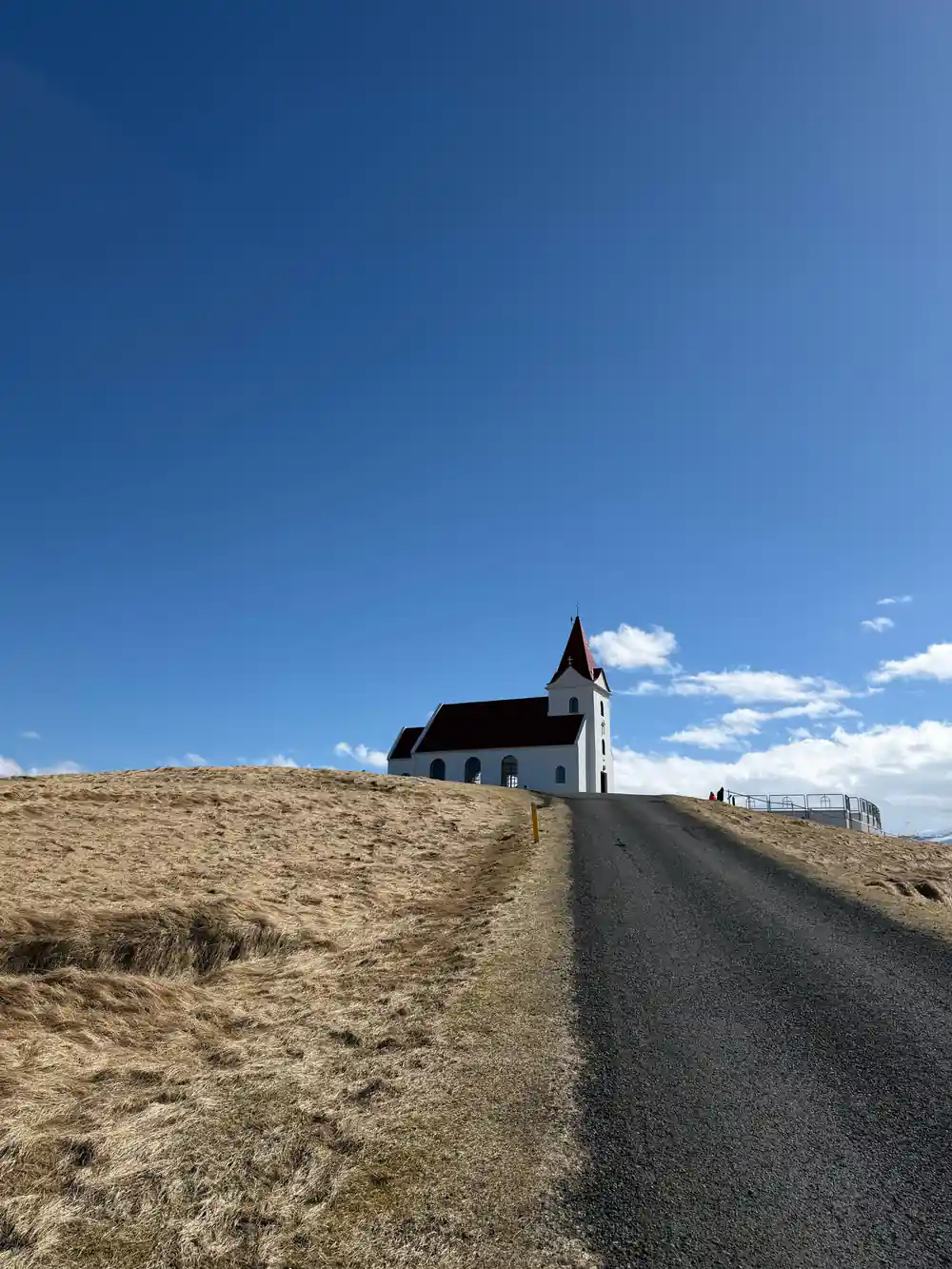
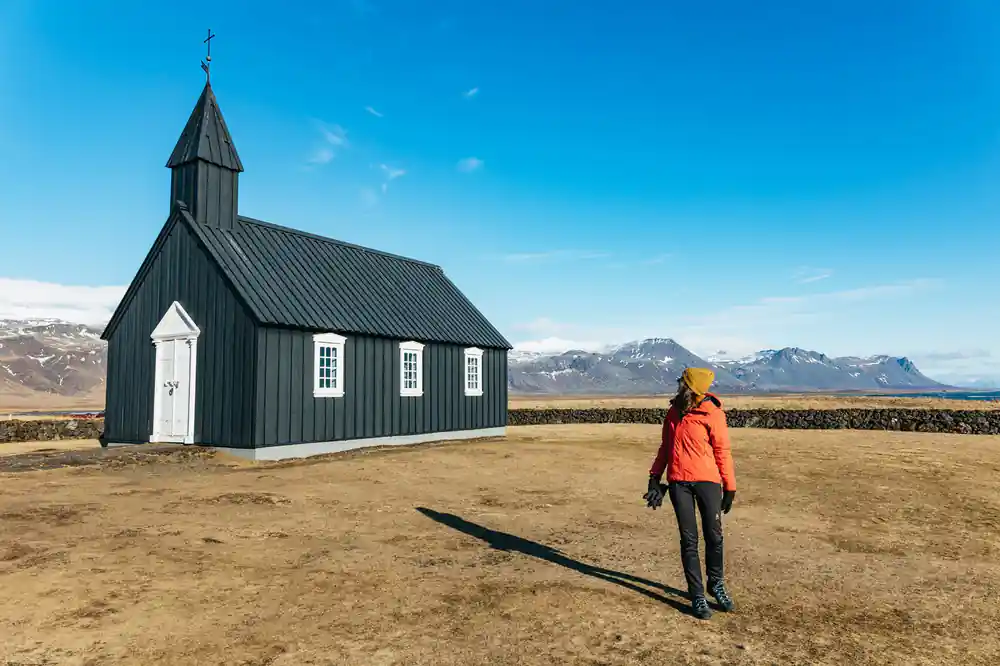
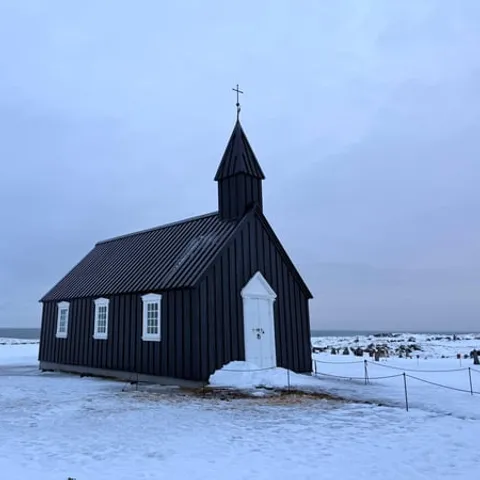
Spring and early summer stretch the daylight out and green up the farmland around Búðakirkja, the small wooden church on the south side of the peninsula.[7] Autumn tends to bring softer light and quieter car parks at the well-known stops. Around midsummer the nights barely get dark, which is wonderful for late driving and rough on sleep. Inland, Stóri-Kambur runs horse riding tours that head into the heart of Snæfellsnes in West Iceland.[8]
If seabirds are the draw, aim for the cliffs at Londrangar, where puffins nest from late spring to summer alongside guillemots, fulmars and kittiwakes.[9] Outside that window the basalt stacks are still worth the stop, just quieter, and the swell breaking below them is a reminder of how exposed this coast is. Bring binoculars if birds are your thing.
Winter on Snæfellsnes and how routes change
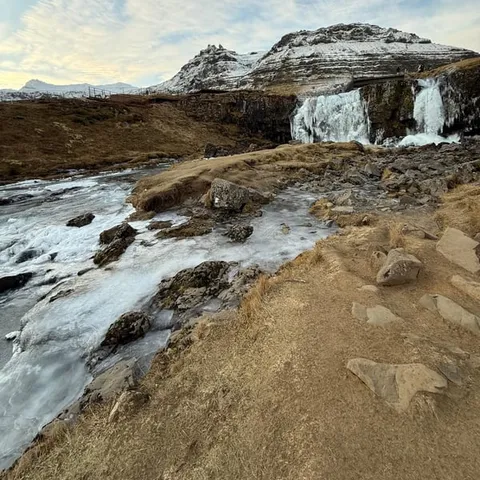
Winter turns the peninsula into a different place. Snow settles on the higher ground, the light sits low for hours, and Grundarfjörður weather can look calm from a window while the coast road is being scoured by wind. Grundarfjörður itself sits beneath Kirkjufell, a 463 meters (1,519 feet) mountain that is one of the most photographed in Iceland.[10] Daylight is short, so a winter day packs a lot into fewer hours.
The temperature in Grundarfjordur Iceland is only part of the story. Add wind and rain and a mild afternoon feels raw; add sunshine and no wind and that same afternoon is pleasant enough to sit outside. Dressing for wind is the most useful thing you can do on a winter day, and standing still at a viewpoint is what cools you down fastest. A buff or a thin balaclava earns its place when the wind comes off the water.
The Snæfellsnes Peninsula in spring sits in the shoulder season: fewer people at the big stops, days that are already long, and a mix of bare ground, slush and old snow on higher ground. Higher ground holds snow long after the coast has cleared, and the difference between the two can be surprising on the same drive. Expect to change plans when the forecast turns, and keep a spare day if you have one.
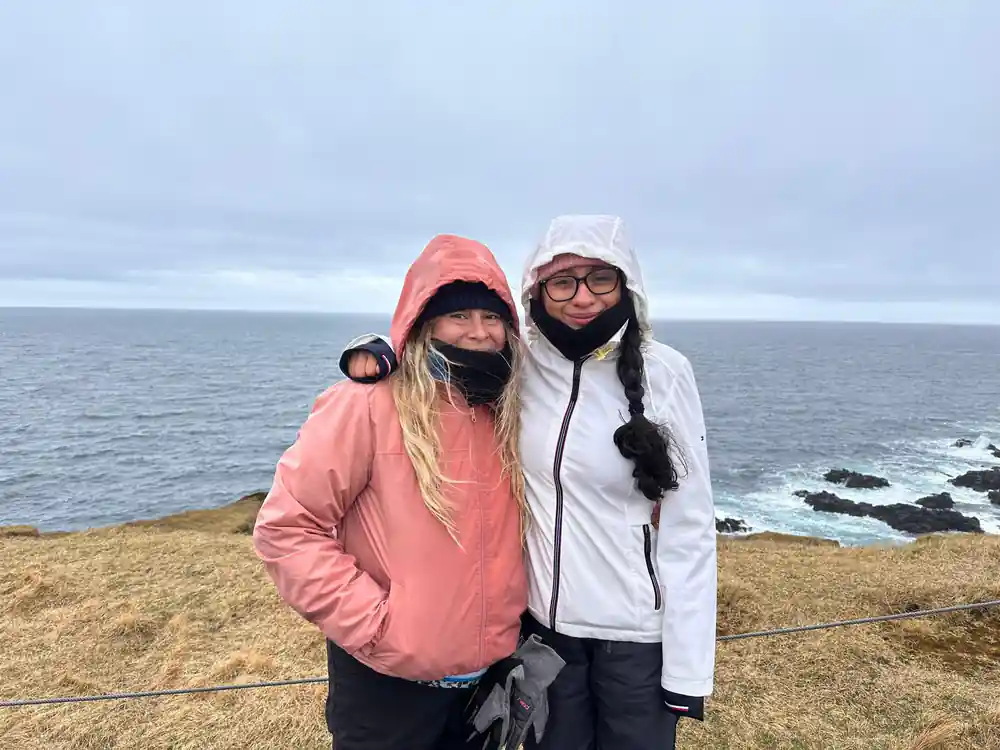
Layers, not one thick coat, are what make a windy coastal day comfortable.
Northern lights and the long dark evenings
The aurora is a darkness phenomenon, so the deep nights of autumn and winter are the window to aim at. It also needs clear sky, and that is the part nobody can book. On the peninsula your odds improve simply by getting away from town lights, and the long drive west from Reykjavik gives you plenty of dark sky once the sun is down.
This full-day tour runs 11 hours from Reykjavik, and starting times are shown when you check availability.[2] An aurora hunt works better as its own evening. A late night out after a long day on the coast is a big ask, and a shorter, dedicated night trip is easier on everyone.
If the lights are your main reason for coming, watch the cloud forecast as closely as the aurora forecast. Clear sky over a dark coast is what makes a sighting possible, and low cloud or a bright moon can spoil a good night even when activity is high. A clear, cold, still night is what you are hoping for.
Coastal weather patterns and the wind
Snæfellsnes is a long, narrow arm of land with open Atlantic on the south side and the broad fjord of Breiðafjörður on the north. Wind is the defining feature of a day out here. It funnels between the mountains, shifts direction around headlands, and turns a comfortable stop into a hurried photo. The south coast takes the full force of Atlantic weather, while the north side can be calm and bright at the same hour.
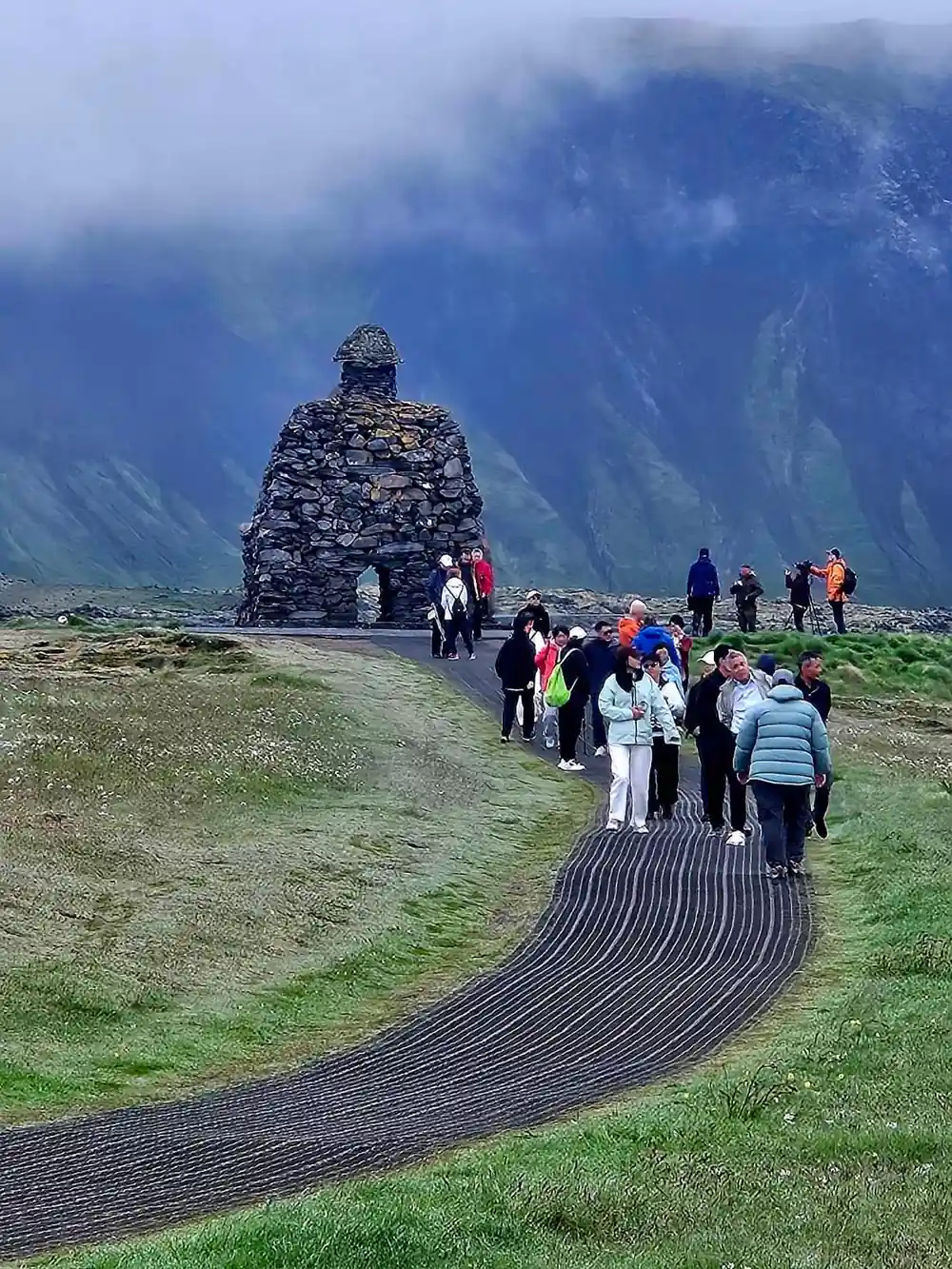
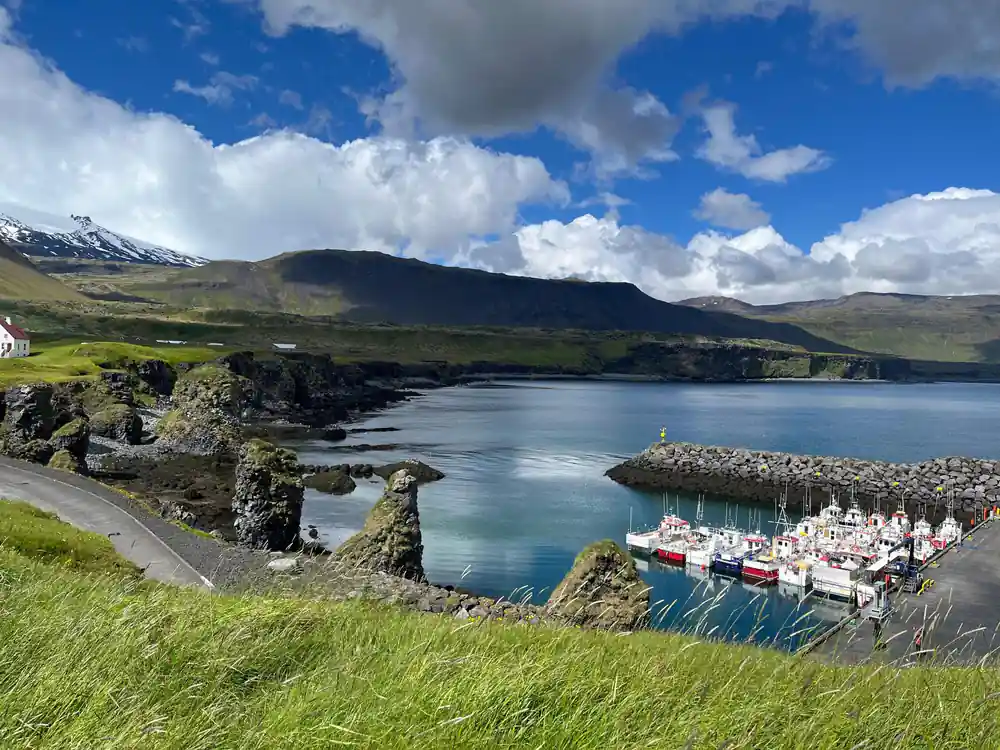
The coastline near Arnarstapi shows why it pays to keep moving. An easy trail starts very close to the Bardur statue in the village and runs about 2 hours return along the coast, past basalt columns, rock arches and seabird ledges.[3] Walk as far as the weather allows rather than committing to the whole thing.
The statue points to older stories. According to Bárðar Saga Snæfellsáss, Bárður Snæfellsás was the settler of the Snæfellsnes area and was half a troll and half a man, with a half-titan father and a human mother.[11] It is a good tale for the drive back, and a short stop that gives the day a bit of story between the cliffs and the beaches.
from US$145
A full day from Reykjavik, 11 hours with an English-speaking guide, pickup options at booking and free cancellation up to 24 hours.[2]
Footwear for black sand and lava
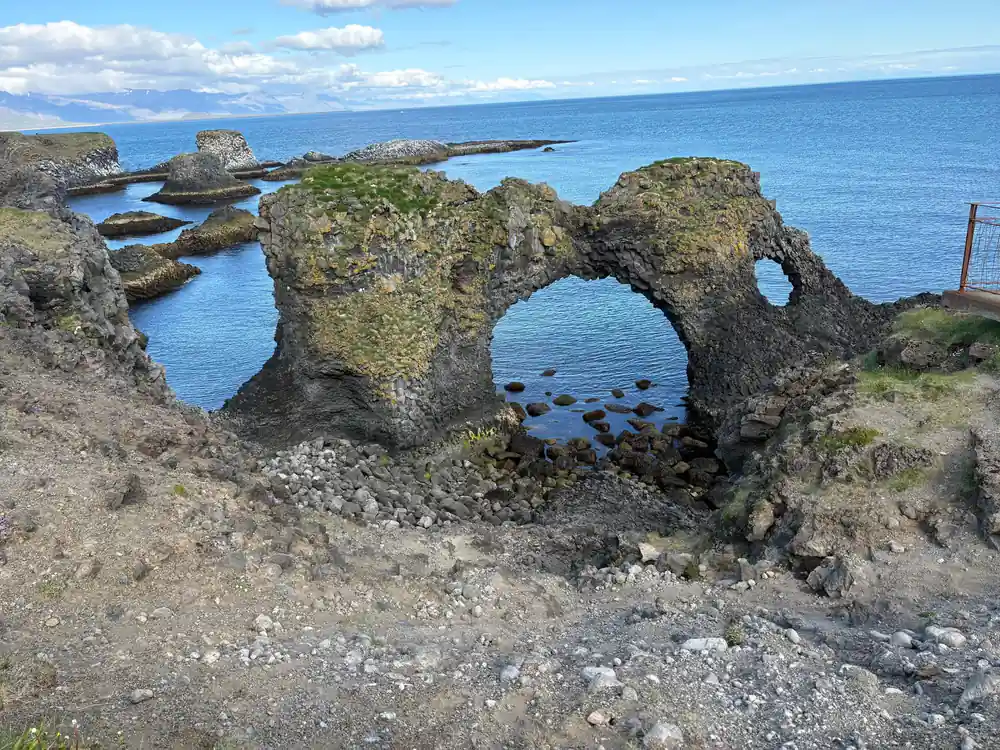
Djúpalónssandur is the stop where footwear matters most. The beach is known for four historic lifting stones, the remains of the British trawler Epine GY7 wrecked here in 1948, the rock arch Gatklettur and the black pebbles at the foot of Snæfellsjökull glacier.[12] Pebbles roll under a smooth sole, and the path down and back is steeper than it looks.
Waterproof boots with deep tread are the practical choice for the whole day, not just the beach. Lava paths are uneven and often wet, gravel car parks hold puddles, and cold wet feet on a long bus ride are miserable. Well-worn trainers and wellington boots with no grip are the two options that spoil the day most often, so pack a spare pair of socks as backup.
If you add a cave stop, the guided Vatnshellir lava cave tour lasts 45 minutes and the ground inside is rough and damp.[13] The cave tour is a separate listing from the peninsula day tour, from US$46.[14] Shoes you do not mind getting dirty and a warm layer work better below ground than a big coat.
Layers that work in coastal wind
Think in three layers: a base that wicks, a warm midlayer and a shell that blocks wind and rain. One heavy coat feels warm in a car park and useless on an exposed headland, where wind goes straight through knitwear and fleece. Cotton next to the skin stays damp and cold once you stop moving.
Small things matter more than you expect. A hat and gloves, a scarf or buff and a hood that stays up in gusts decide whether you enjoy a stop or retreat to the bus. Waterproof over-trousers are cheap insurance against spray at the beach and drizzle on the walk.
If you want a warm finish to the day, Lýsulaugar has geothermal baths including two hot tubs, a large geothermal swimming pool and a cold tub.[15] A swimsuit and a towel take almost no space, and the contrast after a windy afternoon on the coast is memorable.
Road conditions, closures and cancellations
Reykjavík to the peninsula is 136 km (85 mi), roughly a 2-hour drive on Route 1 and Route 54, and on a clear day you can see the glacier-capped volcano from the capital itself.[16] That is the easy part of the journey. The last stretch, out along the coast road, is where weather starts to matter.
Winter is when a plan needs the most slack. Snow, ice and wind can close a pass or a side road, and which stops are possible can come down to what the road is doing that morning. Booking with clear terms helps: on this tour you can cancel up to 24 hours in advance for a full refund, and you reserve now and pay later.[2]
If you are basing yourself on the peninsula rather than in Reykjavik, the distances are bigger than they look on a map. Hotel Snæfellsnes, in the middle of the peninsula, is 32 km from Stykkishólmur, 38 km from Grundarfjörður, 57 km from Ólafsvík, 35 km from Búðir, 54 km from Arnarstapi and 58 km from Hellnar.[17] Driving those in winter is a different job from driving them in high summer.
Distances from Hotel Snæfellsnes
Distances from Hotel Snæfellsnes, which sits in the middle of the peninsula.[17]
What a Snæfellsnes day costs
US dollar from-prices for these GetYourGuide listings.[2][4][5][14][18]
When to book and what to expect
Getting ready for the day
Check the forecast and the road
Look at wind as well as rain, and check the road status before you leave. A wet, windy forecast does not cancel a good day, but it changes what you pack.
Dress in three layers
A wicking base, a warm midlayer and a windproof shell. You can shed the midlayer in the bus and pull it back on at the next headland.
Bring waterproof boots
Deep tread and a waterproof upper for pebble beaches, wet lava paths and gravel car parks. Wet feet ruin a long day faster than cold hands do.
Pack hat, gloves and sunglasses
Wind makes a hat and gloves worth their weight, and low sun over the sea is bright. A dry bag for your phone and camera helps.
Keep a spare hour in your plan
Weather can slow the drive and shorten a stop. Slack in the day means you enjoy the good windows instead of racing the clock back to Reykjavik.
Spend one long day on the Snæfellsnes coast with a guide
from US$146Reserve now & pay later