In a nutshell
- A glacier-capped stratovolcano in West Iceland, white ice over dark lava, and the landmark that gives the whole peninsula its name.[1]
- The peninsula lies west of Reykjavík along Route 1 and Route 54, and the drive out from the city takes about 2 hours.[2]
- Ice cap, lava fields, craters, a black pebble beach, sea cliffs, a small wooden church and the arrow-shaped peak at Kirkjufell.
- The full-day tour from Reykjavík runs 11 hours with an English-speaking live guide and free cancellation up to 24 hours in advance.[3]
- Weather is overall quite good throughout the year but changes quickly, so keep your plan flexible, especially in winter.[4]
- Top choice Snæfellsnes Full-Day Tour from US$145 Duration11 hours[3]GuideEnglish[3]Rating4.72 from 3,765 reviews[3]CancellationFree cancellation up to 24 hours[3] Check availability
- Premium Minibus Tour from US$161 Duration11 hours[5]GuideEnglish[5]Rating4.77 from 789 reviews[5]CancellationFree cancellation up to 24 hours[5] See this tour
- Small-Group Tour from US$148 Duration11 hours[6]GuideSpanish, English[6]Rating4.75 from 208 reviews[6]CancellationFree cancellation up to 24 hours[6] See this tour
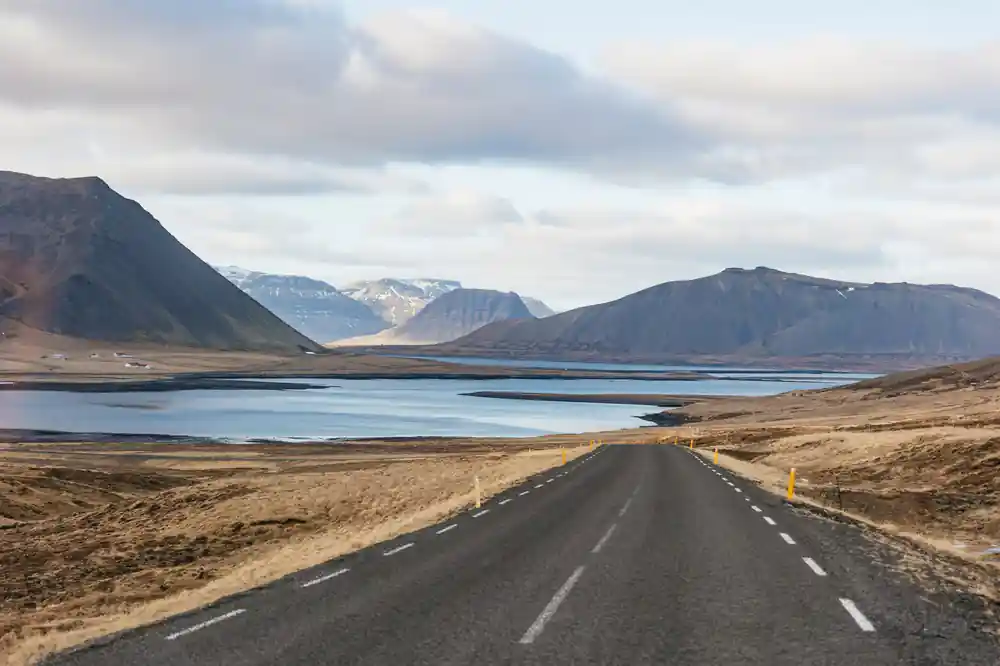
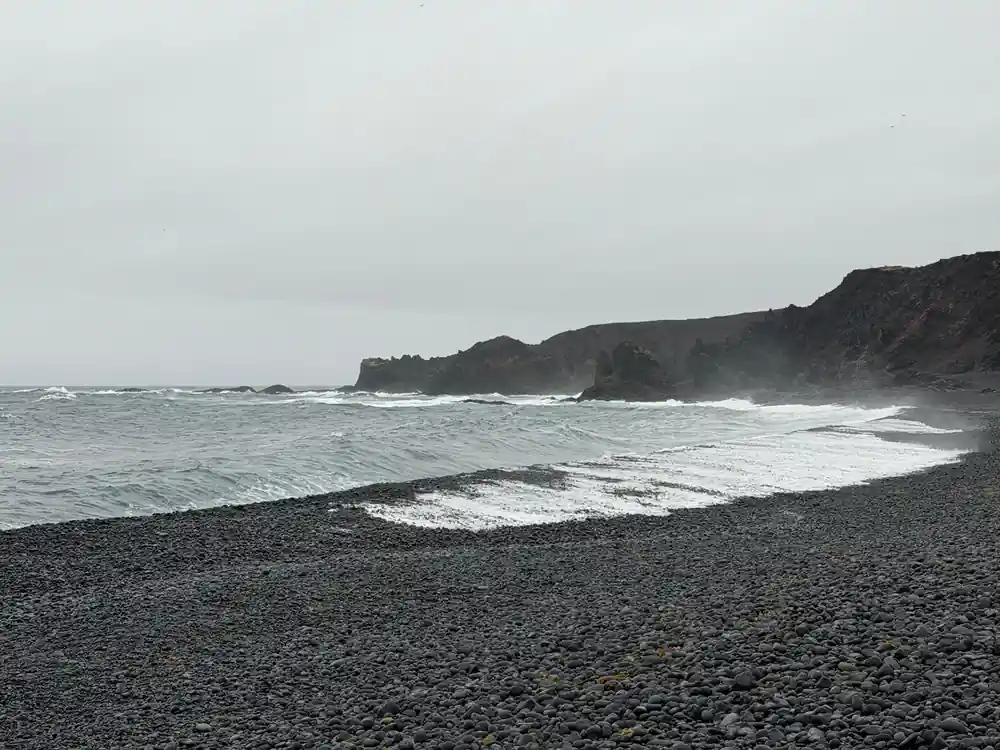
Djúpalónssandur is known for its four historic lifting stones, the remains of the British trawler Epine GY7 wrecked here in 1948, the natural rock arch Gatklettur, and its black pebble beach at the foot of Snæfellsjökull glacier.
Do you need a tour to see Snæfellsjökull?
Things to check
On the day
- Weather is overall quite good throughout the year but can change quickly.[4]
- Keep back from the water on the black sand at Djúpalónssandur and other wave-washed beaches.
- Small-group and minibus days suit mixed ages better than self-driving in winter weather.
- Lýsulaugar has two hot tubs, a large geothermal swimming pool and a cold tub.[7]
What the Snæfellsjökull glacier actually is
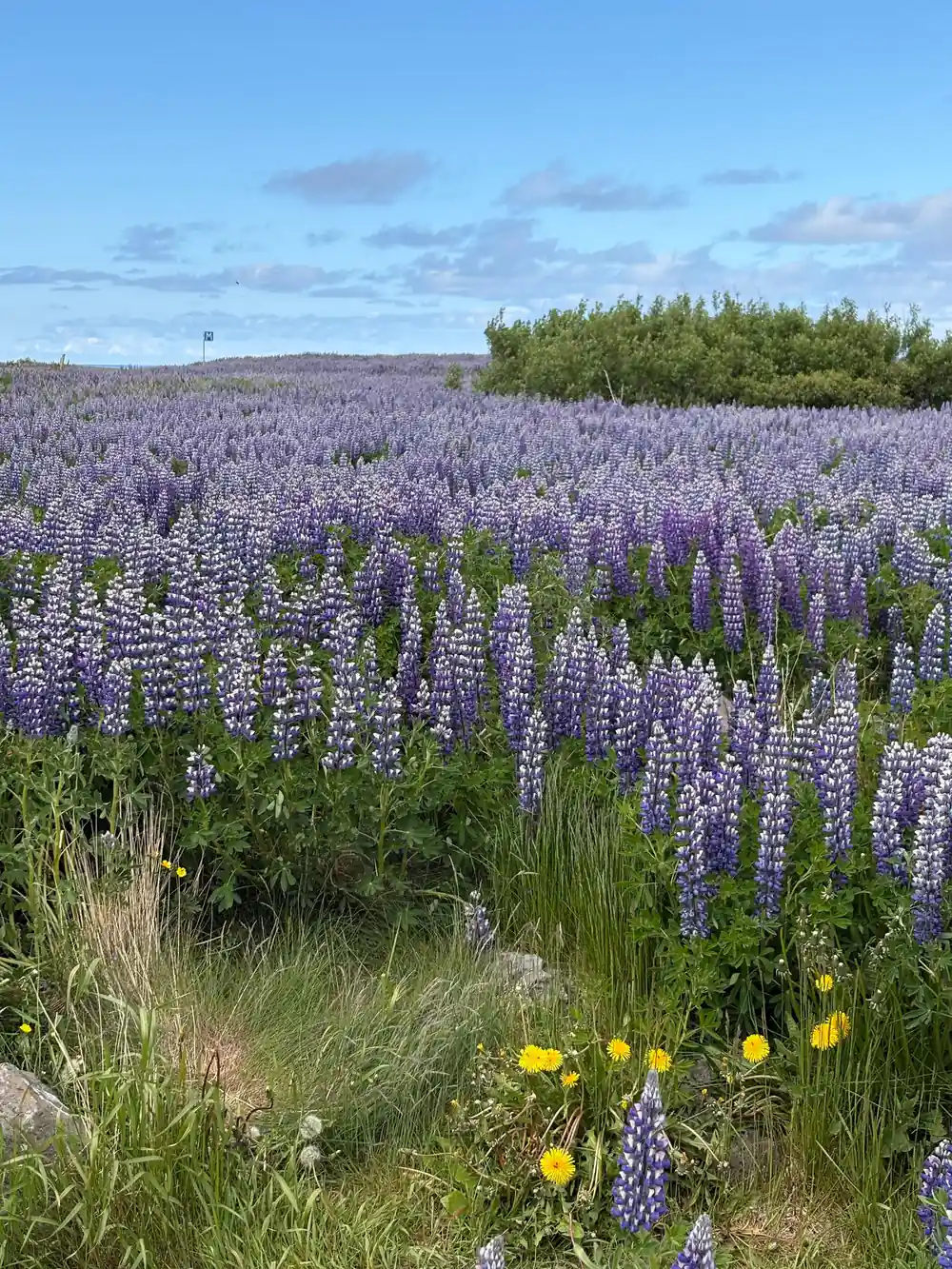
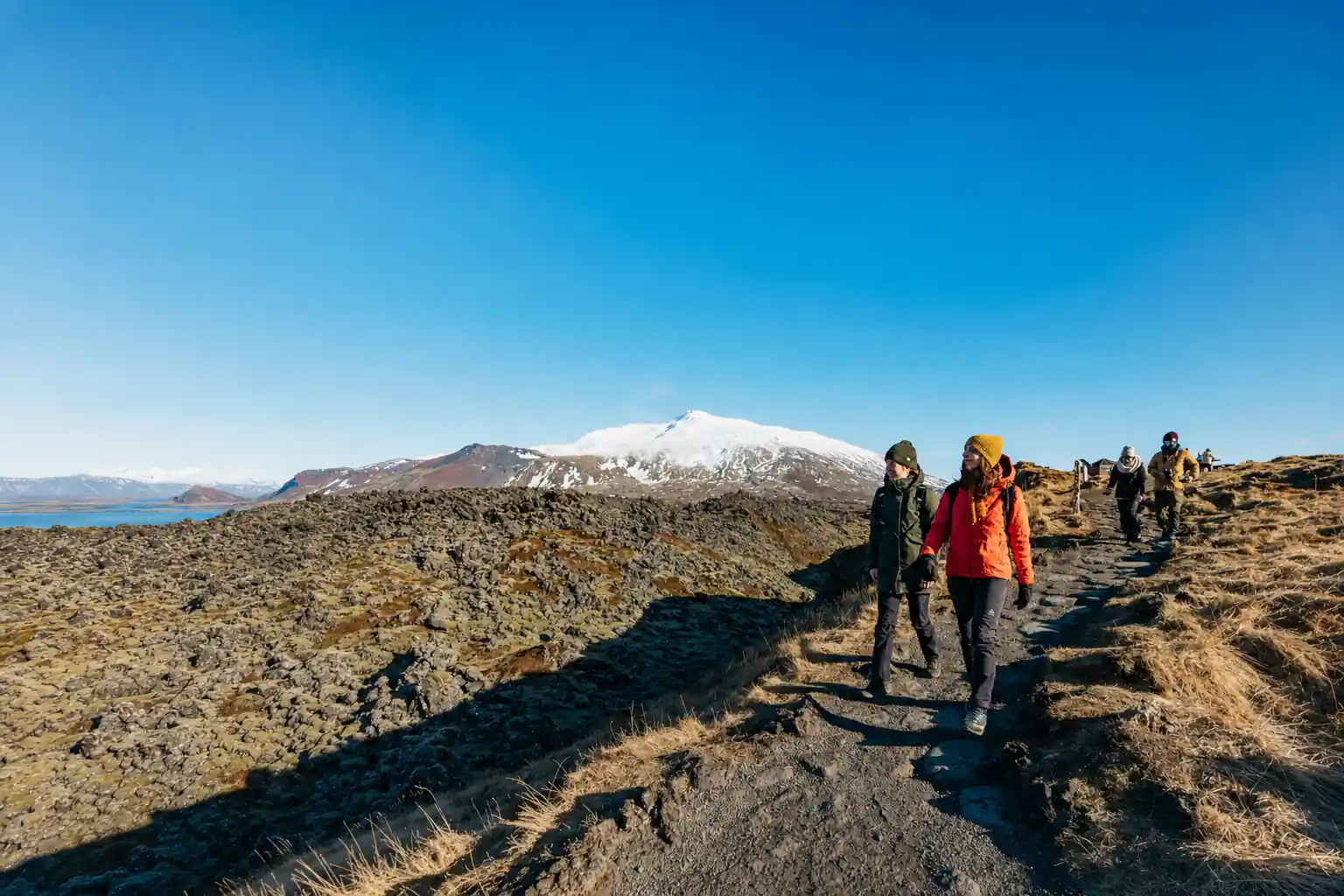
Snæfellsjökull is a glacier-capped stratovolcano in West Iceland that stands 1,446 meters high, and the national park around it was established in 2001.[1] The ice sits in a broad cap over the summit cone. From a distance it reads as a white dome floating above dark rock. Below the ice the mountain is volcanic from top to bottom: craters, cones and long fields of lava, softened over time by moss and grass. From the road it looks calm. Up close it is anything but.
The shape changes with the weather. On a grey day the mountain can vanish into cloud and then reappear; in low winter sun it turns pink; in summer it holds a hard white light that is easy to underexpose. Photographers plan around that, and you will notice it too. Bring a layer you can take off and put back on. The difference between a car park and the coast can feel like two different seasons.
How to say Snæfellsjökull
The name is easier than it looks: say it SNY-fell-yur-kutl. The first part rhymes with sky, the j in jökull sounds like the y in yes, and the final ll is a soft tl shaped at the back of the mouth rather than a hard l. Jökull is the Icelandic word for glacier, and the name describes exactly what sits on the summit.
If you would rather not practise the full name, Snæfellsnes (SNY-fell-sness) will get you where you are going, and the peninsula takes its name from the mountain. Keep the æ and ö if you are typing the name into a map or a booking form, because the accents are part of the spelling and search results behave better with them.
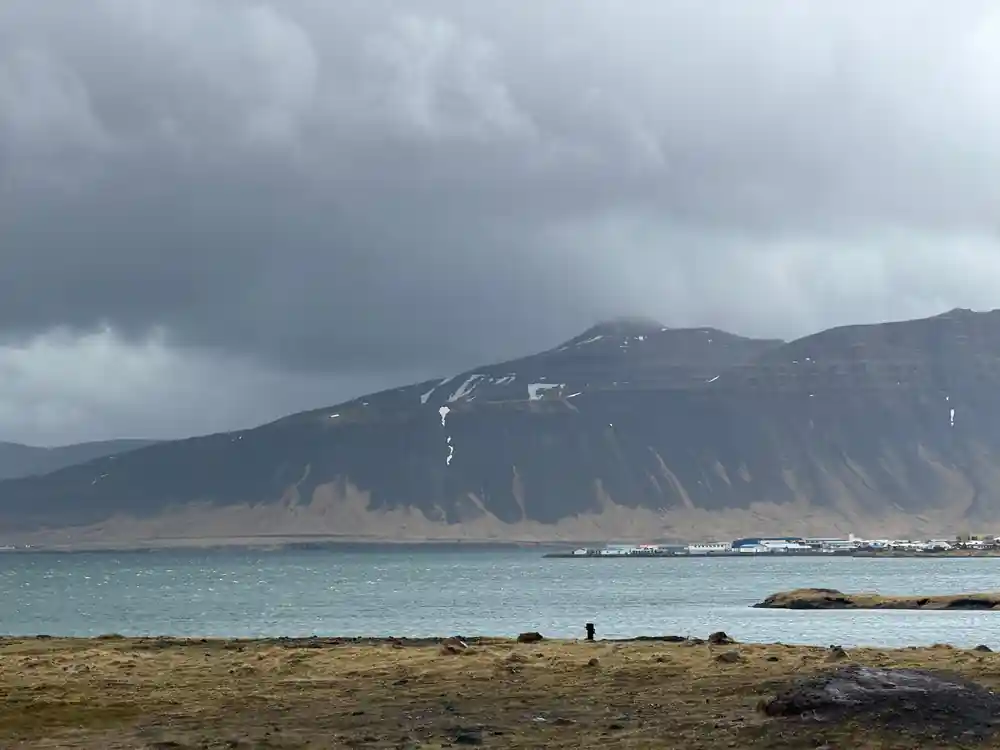
The road west of Reykjavík, with the ice cap of Snæfellsjökull ahead.
Jules Verne and the crater at the centre of the Earth
Snæfellsjökull is the entrance in Jules Verne's Journey to the Centre of the Earth, where a professor and his nephew climb the cone and descend through the crater into a world below. The novel is why the mountain turns up on so many Iceland reading lists, and it is why the peak can feel familiar the first time you actually see it from the road.
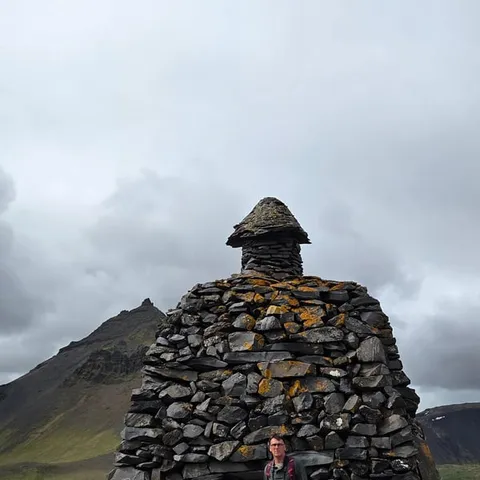
The peninsula had its own story long before that. According to Bárðar Saga Snæfellsáss, Bárður Snæfellsás was the settler of the area and was half a troll and half a man, with a father who was half a titan and a mother who was human.[8] You will meet him in stone at Arnarstapi, where the statue stands near the start of a coastal path.
The literary link has a practical side. Because so many people arrive already knowing the name, the mountain is often the first thing anyone asks a guide about, and the answer is usually a mix of geology and saga. The two stories sit side by side on this peninsula, and a good guide will tell you both while you look at the same lump of rock.
Snæfellsjökull glacier views: what you see and where
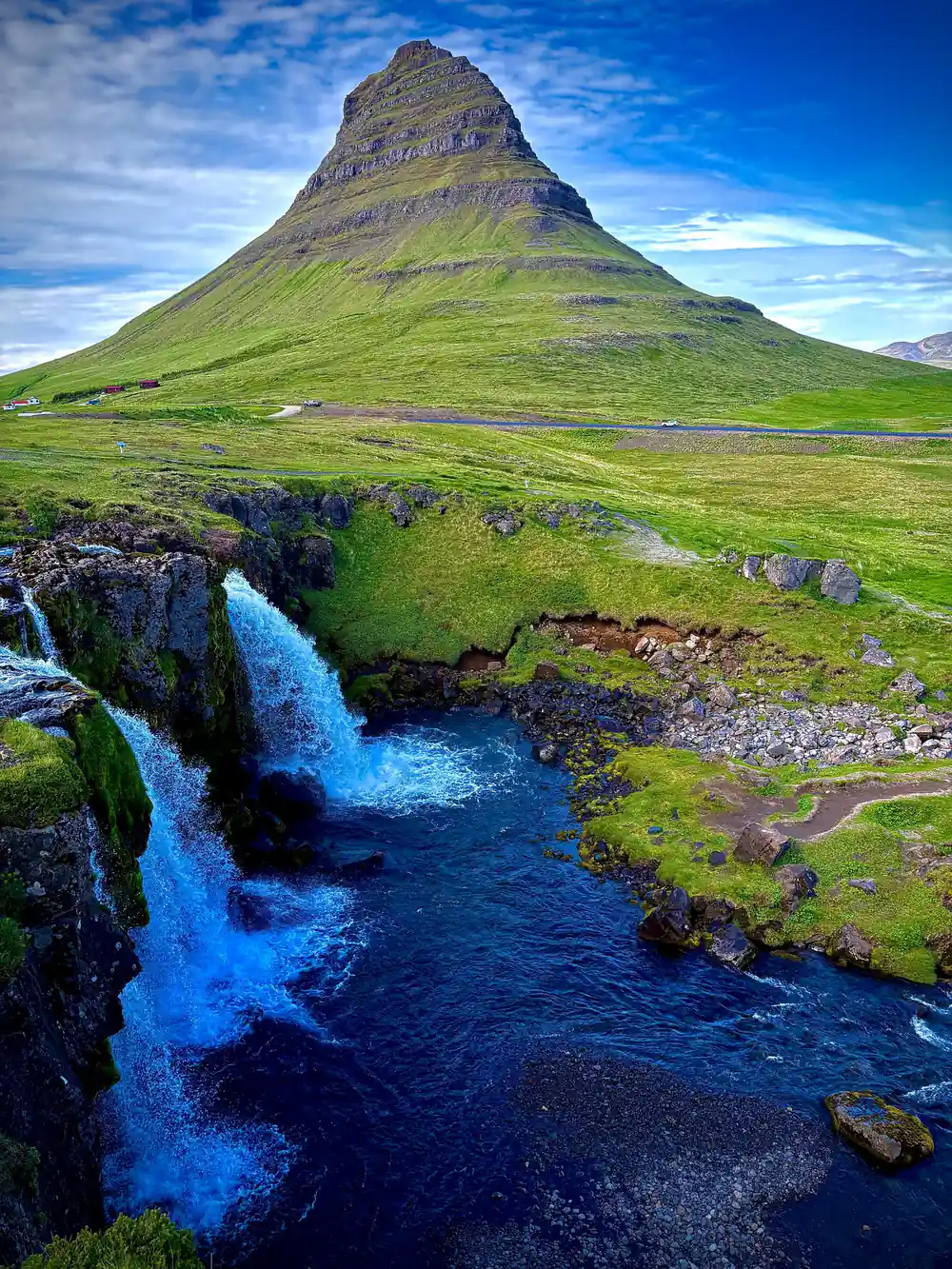
Good views open up from the coast road on the north side of the peninsula, where the ice cap lifts above ridges of lava, and from the beaches on the south side, where you get sea, black sand and mountain in the same frame. Kirkjufell, the arrow-shaped peak near Grundarfjörður, stands 463 meters (1,519 feet) high and is one of the most photographed mountains in Iceland.[9]
The peninsula sits 136 km (85 mi) from Reykjavík, roughly a 2-hour drive via Route 1 and Route 54, and on a clear day the glacier-capped volcano can be seen from the capital.[2] That is what makes the day trip work: you leave the city in the morning, follow the coast through the afternoon, and are back in Reykjavík the same evening with salt on the windscreen.
from US$145
The full-day Snæfellsnes Peninsula tour from Reykjavík runs 11 hours with an English-speaking live guide and costs from US$145.[3]
Lava caves, lifting stones and black pebble beaches
There is a second landscape underneath the lava fields. Vatnshellir is a lava cave on the peninsula, and the guided tour into it lasts 45 minutes.[10] Above ground, Djúpalónssandur is known for its four historic lifting stones, the remains of the British trawler Epine GY7 wrecked there in 1948, the natural rock arch Gatklettur, and its black pebble beach at the foot of Snæfellsjökull glacier.[11]
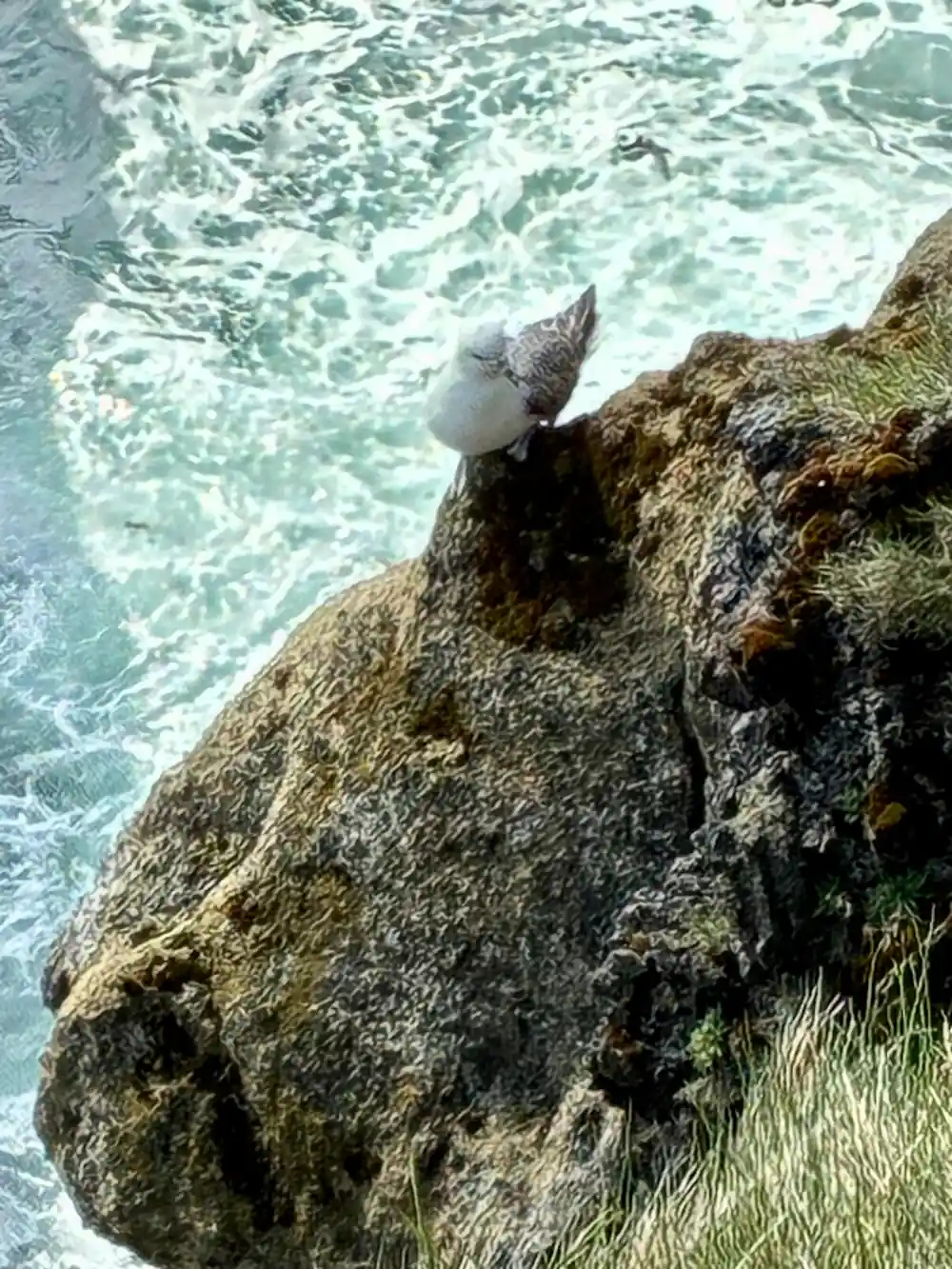
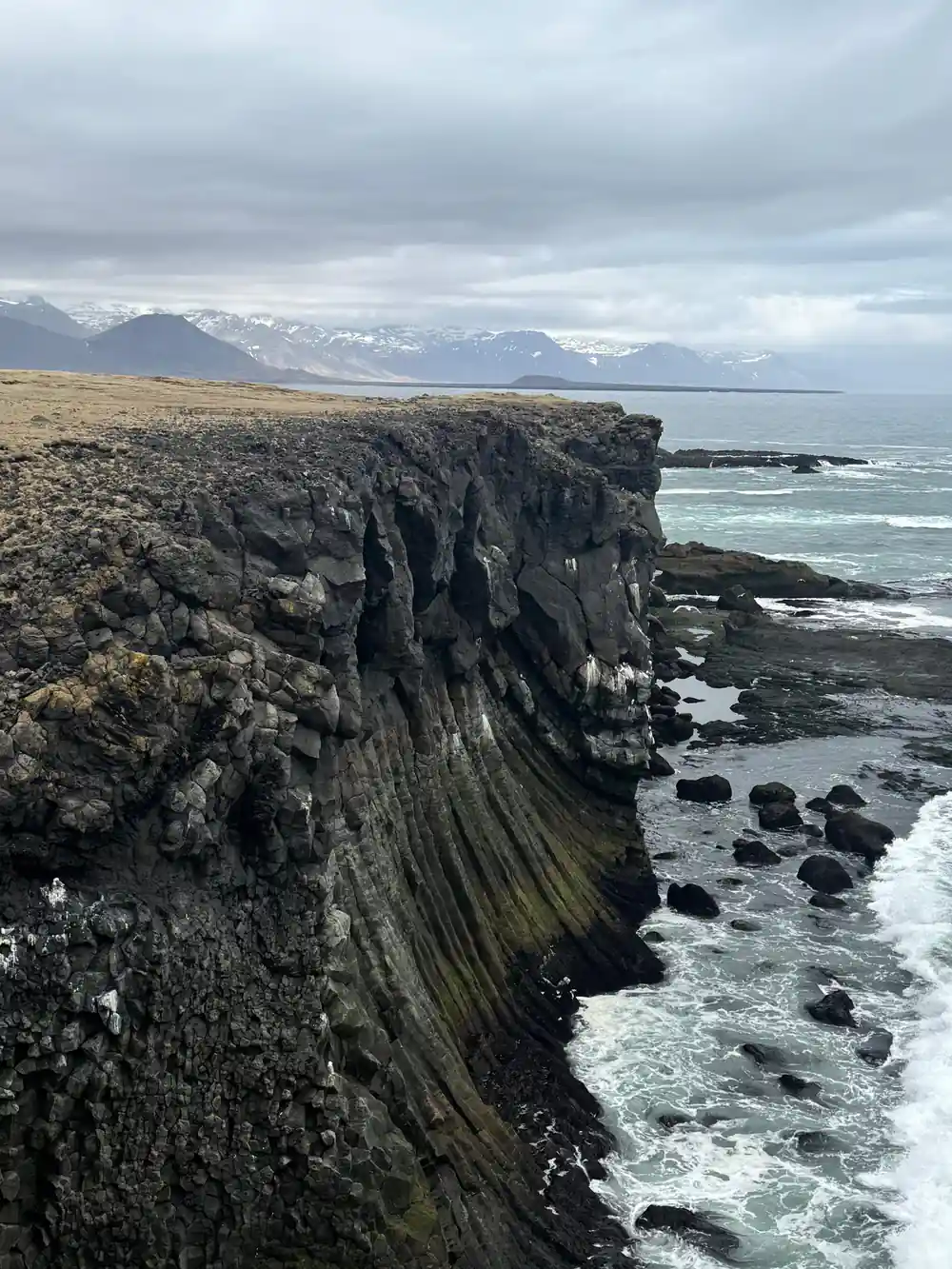
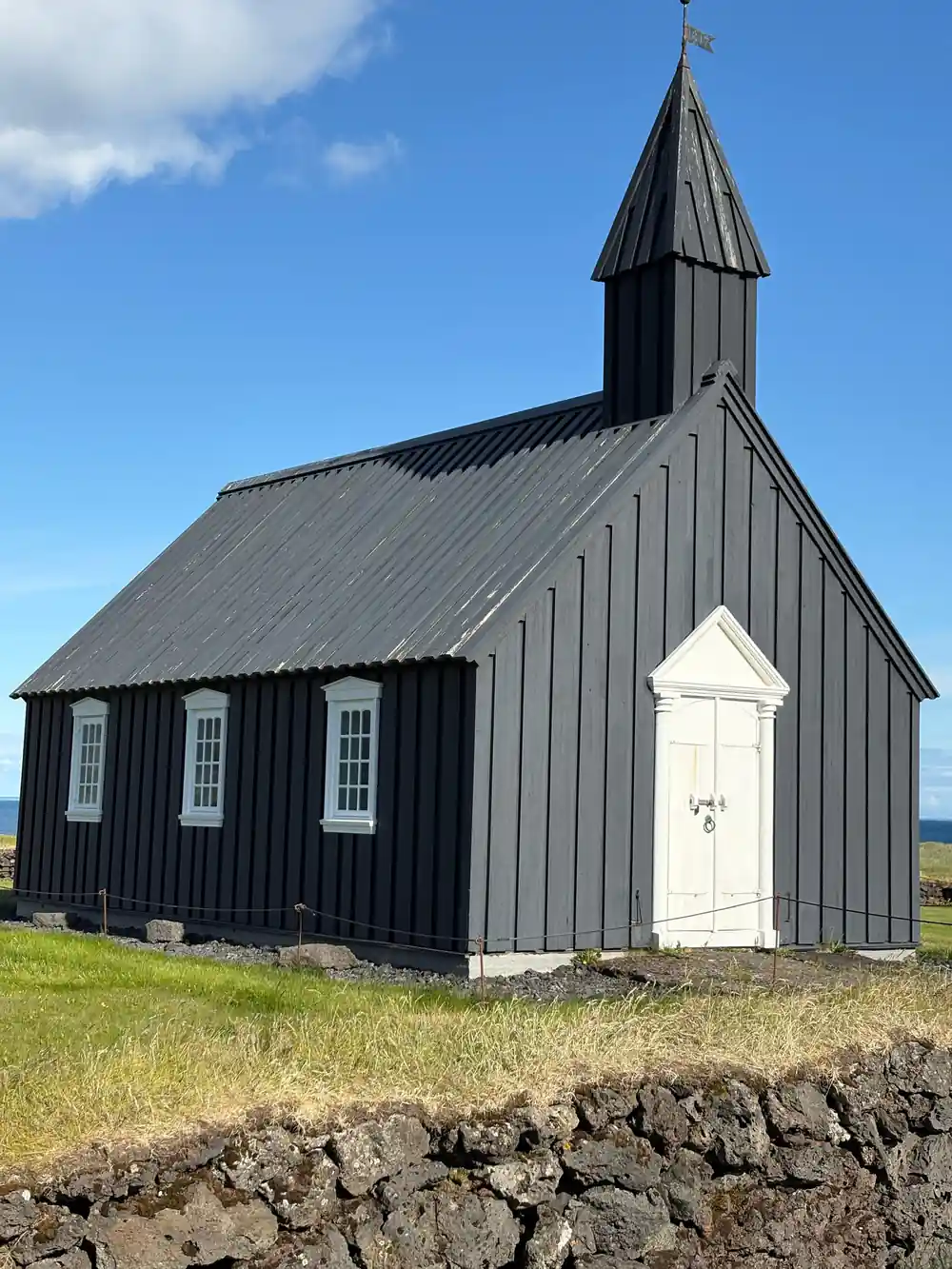
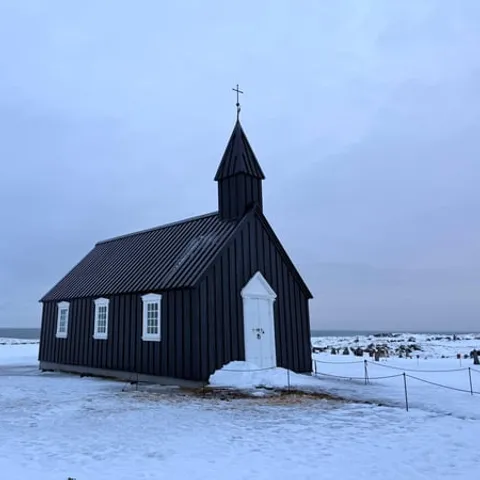
Further along the south coast, the cliffs at Londrangar are busy in the nesting season: puffins, guillemots, fulmars and kittiwakes nest there from late spring to summer.[12] At Arnarstapi, a small, easy trail starts very close to the Bárður statue and takes about 2 hours return along the coastline, past basalt columns, rock arches and birds.[13] Búðakirkja, the small wooden church on the south side of the peninsula, is the other stop most people remember.[14]
Between the stops, the driving is part of the experience. The coast road swings between fishing villages, sheep fields and stretches of nothing at all, and the light changes every few minutes. Keep your camera within reach between stops rather than packed away in a bag, because some of the views arrive through the windscreen.
Snæfellsjökull photos: light, weather and timing
Snæfellsjökull photos come down to weather and patience. A bright ice cap against a bright sky flattens quickly, and it often helps to put something dark in front of it: black lava, wet pebbles, a church wall, a figure in a red jacket. Low light and long shadows do the rest of the work for you.
The peninsula layers up neatly for pictures: sea, beach, moss, mountain, ice. A wide lens handles the stack, and a longer one picks out the ice cap above the ridgeline. Keep a cloth handy for spray at Djúpalónssandur and for rain that arrives sideways, and hold your tripod down in the wind rather than trusting it.
Kirkjufell rewards a slower stop. Walk down towards the water rather than shooting from the roadside, and wait for a gap in the wind so the reflection holds long enough to take.
Planning your visit from Reykjavík
A guided day tour is the straightforward way to see the mountain without driving the loop yourself. The full-day Snæfellsnes Peninsula tour from Reykjavík takes 11 hours, has an English-speaking live guide, and starts from US$145.[3] Pickup is available, and you can check availability for pickup options when you book.[3] Free cancellation up to 24 hours in advance gets you a full refund, and you can reserve now and pay later.[3]
The stops on the full-day route run from Vatnaleið through Kirkjufell, Ólafsvík, Djúpalónssandur, Londrangar and Arnarstapi to Búðakirkja and Ytri Tunga before the drive back.[3] In practice that is a long and varied day: basalt cliffs early, a mountain and a village at midday, black sand and a wooden church in the afternoon, with the ice cap somewhere in the frame for most of it.
Weather on Snæfellsnes is overall quite good throughout the year, but it can change quickly, so having a flexible travel plan is a good idea, especially in winter.[4] It is worth knowing before you go. A calm, bright morning on one side of the peninsula tells you nothing about the far side, and a waterproof jacket earns its space in the bag in every month of the year.
If you want more than a day, there is plenty to build around it. Whale watching on Snæfellsnes runs from Ólafsvík.[15] Lýsulaugar has geothermal baths that include two hot tubs, a large geothermal swimming pool and a cold tub.[7] Stóri-Kambur offers horse riding tours that take riders into the heart of Snæfellsnes.[16] Hotel Snæfellsnes sits in the middle of the peninsula, 32 km from Stykkishólmur, 38 km from Grundarfjörður, 57 km from Ólafsvík, 35 km from Búðir, 54 km from Arnarstapi and 58 km from Hellnar.[17]
Distances from Hotel Snæfellsnes
Distances from Hotel Snæfellsnes, in the middle of the Snæfellsnes peninsula.[17]
Day tour prices compared
From-prices in US dollars, taken from the tour listings.[3][5][6][18]
When to go
How to plan your day
Choose your base
Reykjavík works for a day trip; Hotel Snæfellsnes is 32 km from Stykkishólmur and 38 km from Grundarfjörður if you stay out west.[17]
Book the tour
The full-day peninsula tour runs 11 hours with pickup available and free cancellation up to 24 hours in advance.[3]
Pack for wind
Layers, a waterproof shell, gloves and sunglasses; the weather can change quickly, especially in winter.[4]
Plan your stops
Allow about 2 hours return for the Arnarstapi coastal walk and 45 minutes for the Vatnshellir lava cave tour.[10][13]
Keep the evening free
An 11-hour day from Reykjavík leaves little room for evening plans, so keep dinner simple.[3]
See the Snæfellsjökull glacier on a full-day tour
from US$146Reserve now & pay later