In a nutshell
- The peninsula is 136 km (85 mi) from Reykjavík, roughly a 2-hour drive via Route 1 and Route 54.[1]
- Vatnshellir lava cave tours last 45 minutes and are listed from US$46, rated 4.70 from 270 reviews.[2][3]
- The full-day tour from Reykjavik runs 11 hours, is listed from US$145 and is rated 4.72 from 3,765 reviews.[4]
- Snæfellsjökull is a 1,446-meter glacier-capped stratovolcano, and its national park was established in 2001.[5]
- Weather on Snæfellsnes is overall quite good through the year but changes quickly, so keep plans flexible in winter.[6]
- Top choice Snæfellsnes Full-Day Tour from US$145 Duration11 hours[4]Rating4.72 from 3,765 reviews[4]GuideEnglish[4]CancellationCancel up to 24 hours before[4] Check availability
- Kirkjufell Minibus Tour from US$161 Duration11 hours[7]Rating4.77 from 789 reviews[7]GuideEnglish[7]CancellationCancel up to 24 hours before[7] See this tour
- Kirkjufell Small-Group Tour from US$138 Duration12 hours[8]Rating4.60 from 478 reviews[8]GuideEnglish[8]CancellationCancel up to 24 hours before[8] See this tour
Guided by Summit Adventure Guides, the sole licensed operator of Vatnshellir Cave tours, you'll embark on a 45-minute journey into this natural wonder.
Who the underground day suits
Things to check
How lava tubes form under Snæfellsnes
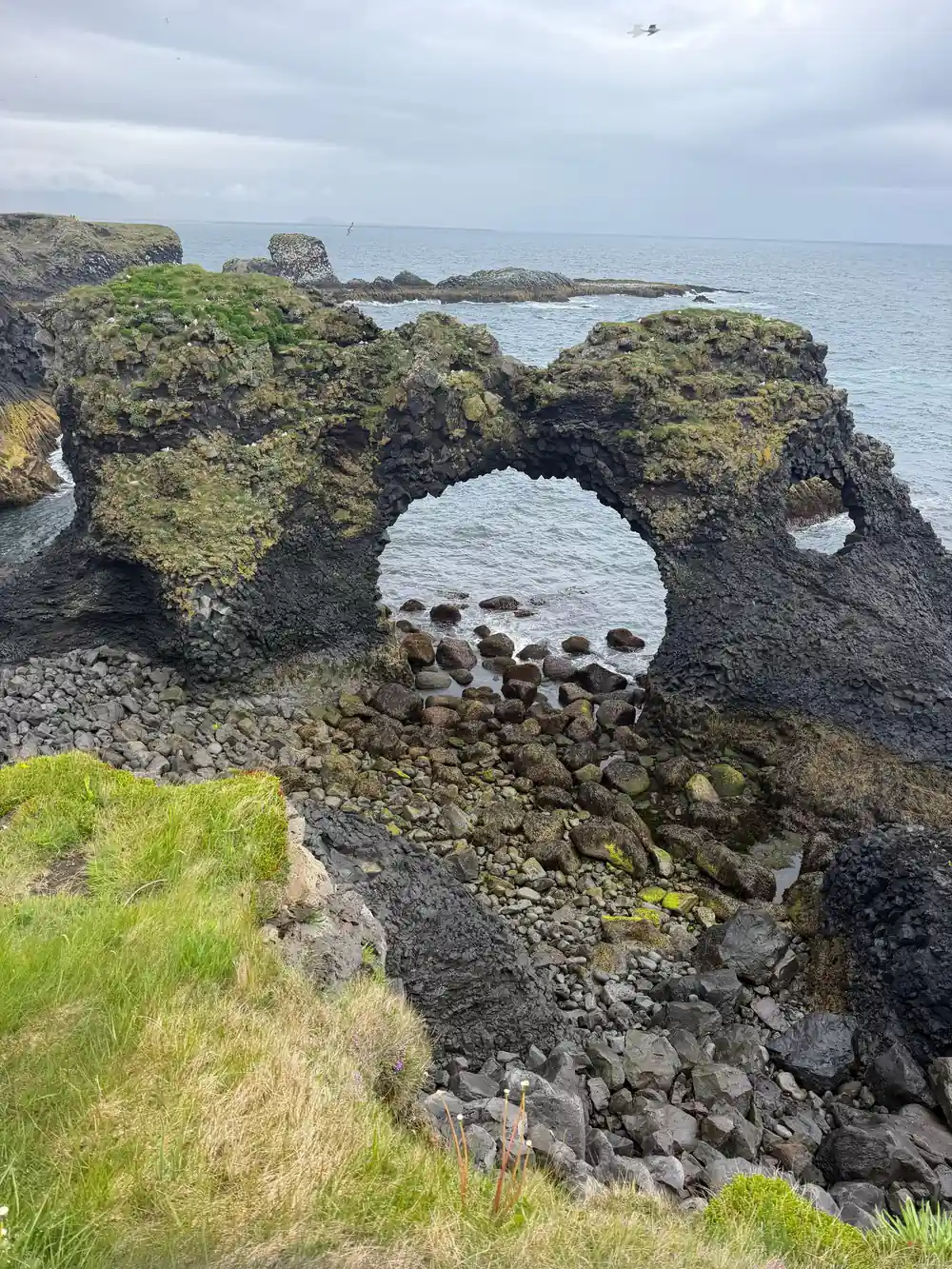
Iceland sits on a spreading ridge, and Snæfellsnes is a good place to read what that means at walking pace. When a lava flow moves, its surface cools and crusts over while the molten rock keeps running underneath. The flow drains away and leaves a tube: a roofed corridor in the rock, sometimes smooth, sometimes rough with ropy coils, cracked crust and fallen slabs. Along the Snæfellsnes Peninsula lava fields on the south coast, these old plumbing systems lie quietly under moss and grass, and in places the sea has cut straight through them, leaving cave mouths in the cliff face. Some tubes are long enough to walk through; others are no more than a hollow under a crust of rock you would never notice from the road.
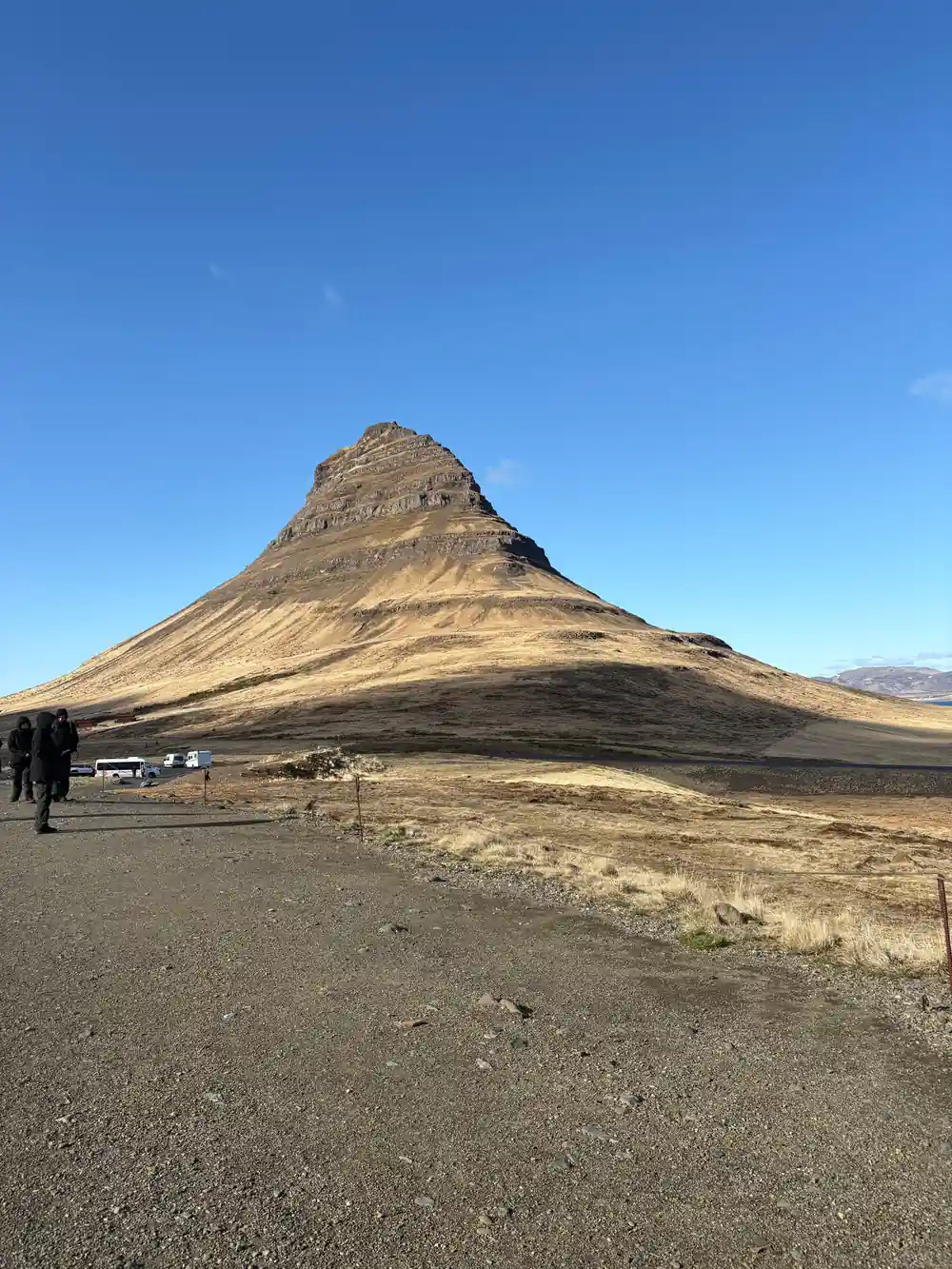
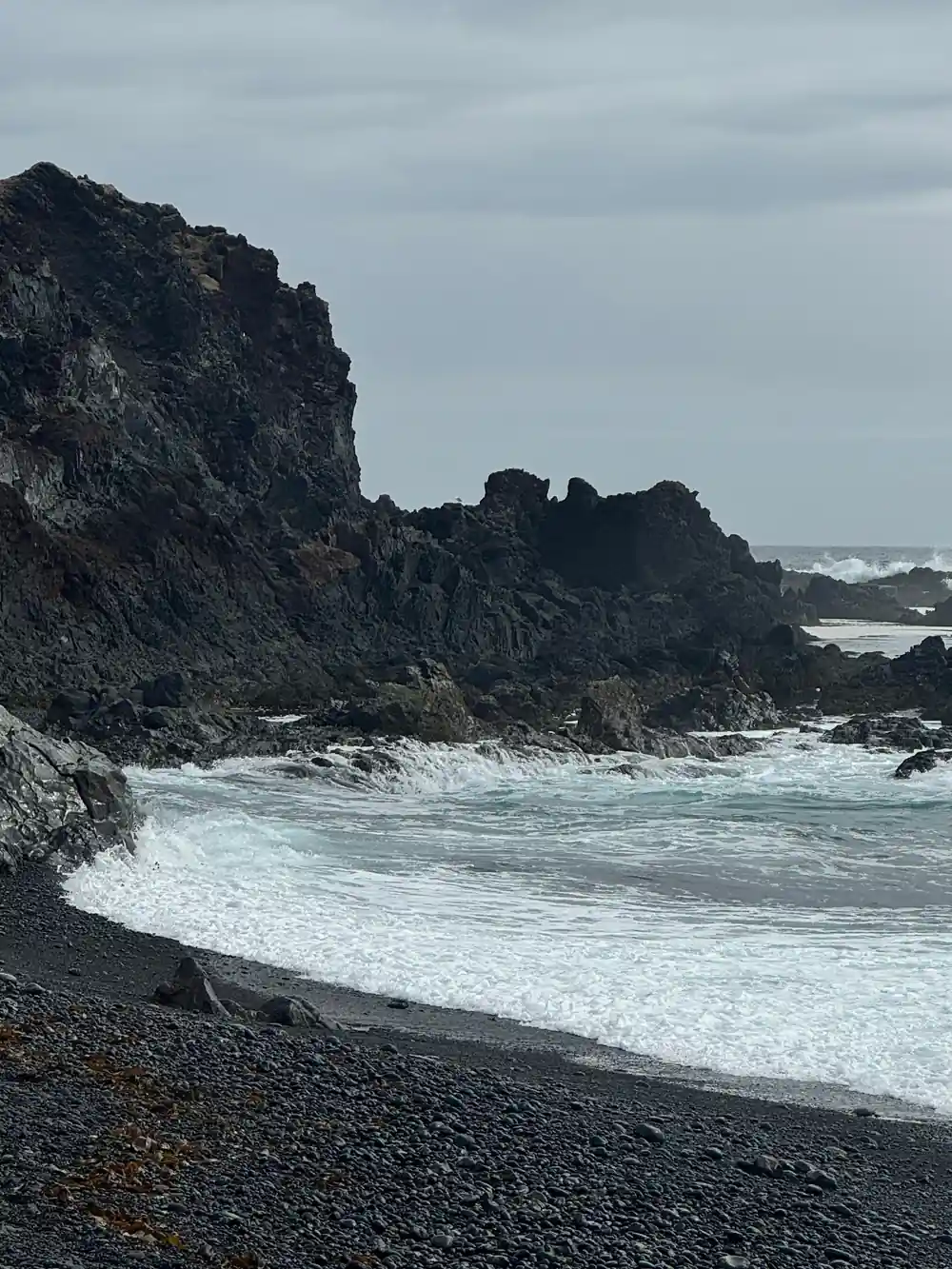
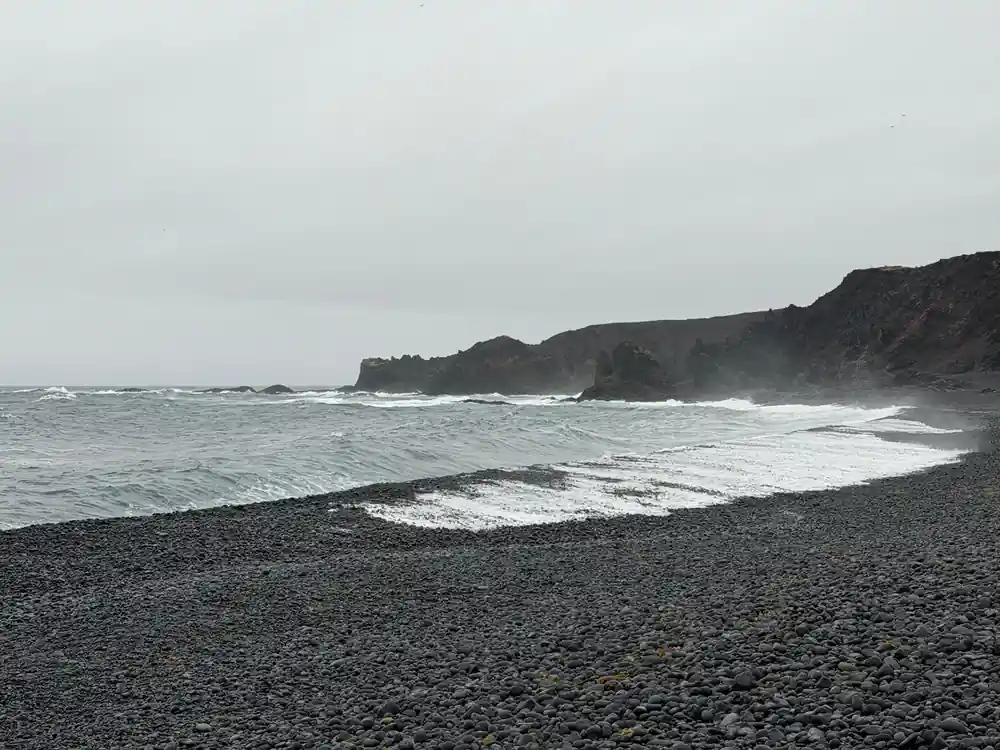
The mountain at the end of the peninsula belongs to the same story. Snæfellsjökull is a 1,446-meter glacier-capped stratovolcano, and it sits inside Snæfellsjökull National Park, which was established in 2001.[5] Lava from earlier eruptions now forms the coastal cliffs, the black beaches and the cave systems you can walk into. The peninsula is 136 km (85 mi) from Reykjavík, roughly a 2-hour drive via Route 1 and Route 54.[1] A full-day tour from Reykjavik runs 11 hours and carries a live English-speaking guide, with pickup options to check at booking.[4]
Inside Vatnshellir: the lava cave tour
Vatnshellir is the lava tube with a bookable visit attached, and it is the easiest underground stop to fold into a peninsula day. The guided cave tours here take 45 minutes.[2] A staircase drops you into a chamber the lava left behind, past walls that catch lamplight in bands of colour, and the route brings you back up into daylight. The listing includes a live English-speaking guide and a skip-the-ticket-line option.[3] It is a short walk down and back up, but the rock underfoot is not a pavement.
Vatnshellir lava cave tours are listed from US$46 and rated 4.70 from 270 reviews, with guide scores at 4.8 and value for money at 4.5.[3] You can reserve now and pay later, and free cancellation applies up to 24 hours in advance for a full refund.[3] The visit lasts 45 minutes, so it sits inside a longer day without swallowing the itinerary.[2] Wear a warm layer, gloves and shoes with grip. Caves hold a steady chill that has nothing to do with the temperature in the car park, and a torch-lit floor is no place for smooth soles.
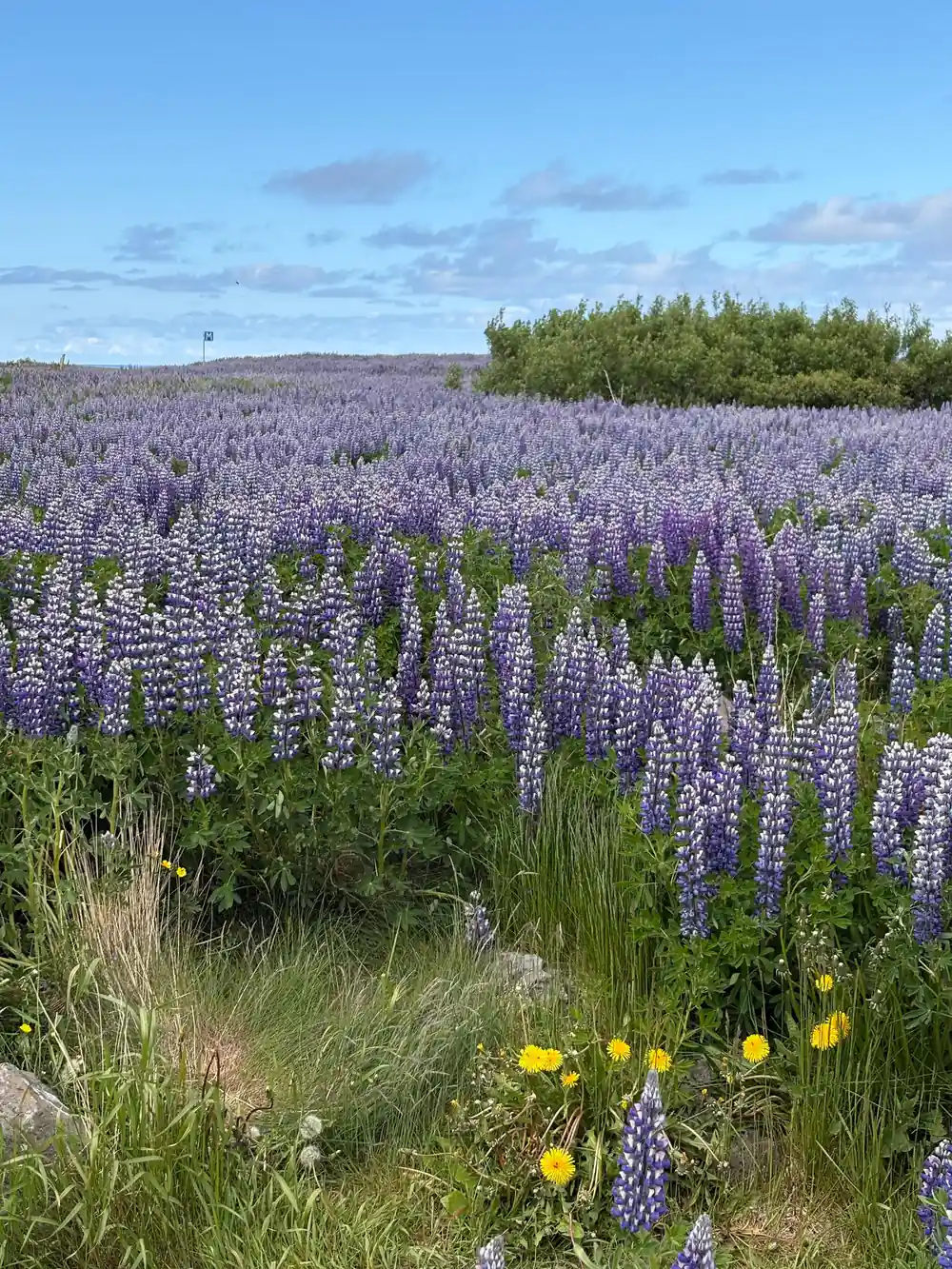
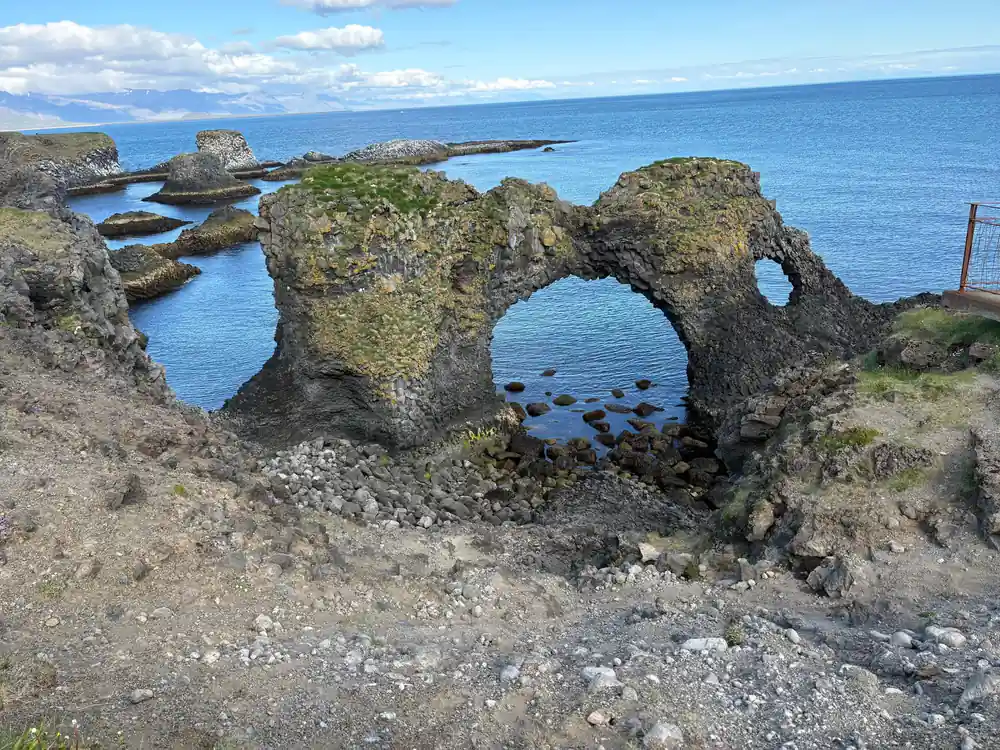
Lava, moss and rock arches where the underground meets the Snæfellsnes coast.
Saxhóll Crater and the craters you can walk into
Craters are the other half of the underground story, and they show up along the road for much of the drive west. Saxhóll Crater appears as a stop on private itineraries that also take in Kirkjufell, Djúpalónssandur, Arnarstapi and Búðakirkja.[10] Another private tour lists the crater alongside Hellnar, Hellissandur and Borgarnes.[11] A scoria cone like this is built from frothy fragments thrown out in a short, violent burst, and the rim and the hollow inside are the parts you walk around.
Walking into a crater is a strange feeling: the noise of the road fades, the wind shifts, and you stand in a bowl of red and black gravel with the sky all around the rim. Keep to the paths and any steps provided. Loose scoria slides underfoot, and the moss and lichen around the craters take a long time to come back once they are scuffed. If you would rather cover the lava with an engine under you, the ATV tour into Snæfellsjökull National Park runs 2 hours and is listed from US$160, rated 4.42 from 21 reviews, with guide and transportation both at 5 in its breakdown.[12]
Rauðfeldsgjá: the cleft in the mountainside
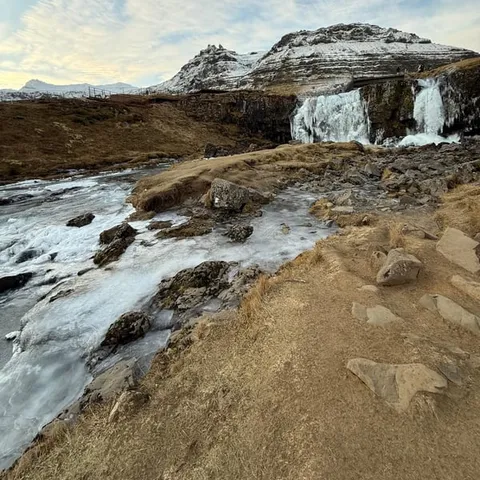
Rauðfeldsgjá is not a cave with a roof over it but a narrow cleft cut into the mountainside, a slot that water has worked back into the rock until the walls stand high on both sides. From the road it reads as a dark line across a green slope, easy to miss if you are watching the sea. Up close it is cool, damp and shadowed. Following it in means stepping over the stream and squeezing between wet rock, and you can turn around whenever the gap gets too tight for you.
This stretch of coast comes with a story attached. According to Bárðar Saga Snæfellsáss, Bárður Snæfellsás was the settler of the Snæfellsnes area and was half a troll and half a man, his father being half a titan and his mother human.[13] The Bardur statue at Arnarstapi stands near the start of the coastal path, a small, easy trail that takes about 2 hours return along the coastline.[9] You do not need the saga to enjoy the gorge, but knowing who is supposed to have lived in this landscape changes what you notice.
from US$46
The guided Vatnshellir lava cave tour lasts 45 minutes, with a live English-speaking guide and a skip-the-line option.[2][3]
Búðahraun and the moss-covered lava
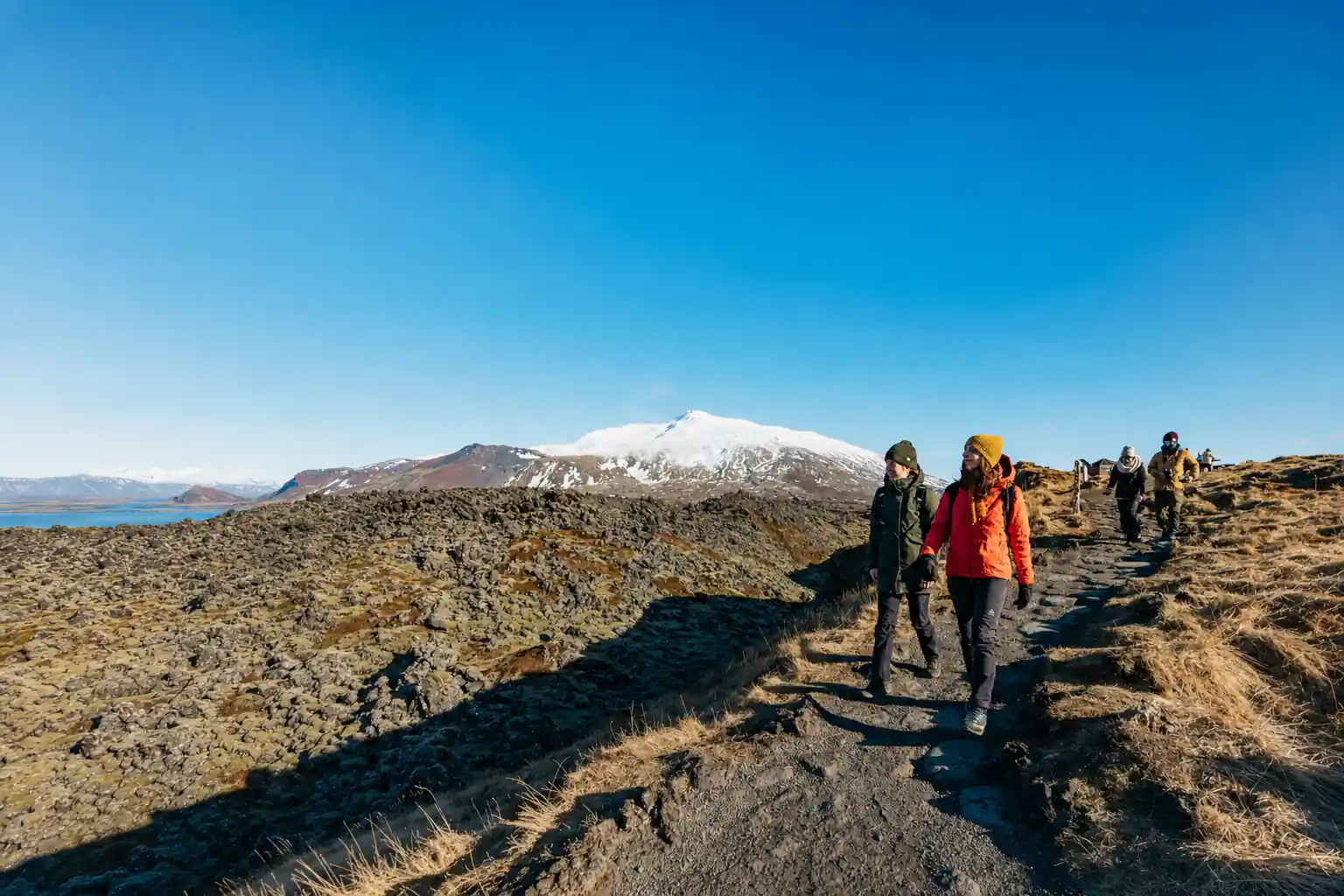
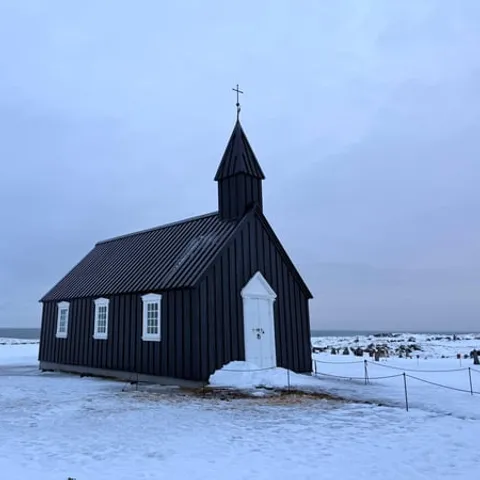
Búðahraun is the lava field on the south coast, a low lumpy sea of rock under a pale green coat of moss. Búðakirkja, the small wooden church on the south side of the peninsula, anchors the stop.[14] The church stands near Búðir, which is 35 km from Hotel Snæfellsnes in the middle of the peninsula.[15] Around it the lava spreads out in ridges and hollows, with the sea not far away and the glacier on the skyline behind.
Moss on lava is slow work. It holds moisture, softens the rock surface and takes a long time to return once it is worn away, so the paths and boardwalks are there for a reason. Keep to them and the lava field stays as it looks when you arrive. The weather on Snæfellsnes is overall quite good throughout the year, but it can change quickly, so having a flexible plan is a good idea, especially in winter.[6] A dry morning can turn into sideways rain over one coffee, and wet lava is slippery lava.
Snaefellsjokull ice cave: what is possible here
Glacier ice caves form where meltwater and geothermal heat hollow a glacier out from below, and the ice caves people travel for sit under the big ice caps rather than under this one. If a Snæfellsjökull ice cave is what you are hoping to walk into, the underground trip you can book on the peninsula goes into lava instead: the Vatnshellir lava cave tour.[3] It runs 45 minutes and is listed from US$46.[2][3] That is the honest shape of it, and the cave is still worth the stop.
What this glacier gives you is a skyline rather than a tunnel. Snæfellsjökull stands 1,446 meters high and is glacier-capped, inside a national park established in 2001.[5] From the road it is the white shape above dark lava, and the park around it holds Djúpalónssandur, Londrangar and the coast at Arnarstapi. To get closer to the ice without going into it, the ATV tour into Snæfellsjökull National Park runs 2 hours and is listed from US$160.[12]
Adding a cave stop to your coach day tour
The full-day tour from Reykjavik runs 11 hours with a live guide in English, offers pickup options to check at booking, lets you reserve now and pay later, and allows free cancellation up to 24 hours in advance for a full refund.[4] Its listed stops run from the bus through Vatnaleið, Kirkjufell, Ólafsvík, Djúpalónssandur, Londrangar, Arnarstapi, Búðakirkja and Ytri Tunga, with 28 drop-off locations.[4] It is listed from US$145 and rated 4.72 from 3,765 reviews, with guide scores at 4.8.[4]
Vatnshellir is not among the listed stops.[4] The 45-minute lava cave tour is a separate booking, listed from US$46.[2][3] If you are driving yourself, the peninsula is 136 km (85 mi) from Reykjavík, roughly a 2-hour drive via Route 1 and Route 54.[1] For a slower finish to the day, Lýsulaugar has geothermal baths including two hot tubs, a large geothermal swimming pool and a cold tub.[16] If you are on foot at the coast, the Arnarstapi trail takes about 2 hours return along the cliffs.[9]
How the four main listings are rated
From-prices for a peninsula day and a cave stop
From-prices in US dollars for[4],[3],[7] and[8].
When to go and what to book
Plan your underground day
Set your base
The peninsula is 136 km (85 mi) from Reykjavík, roughly a 2-hour drive via Route 1 and Route 54.[1]
Book the cave slot
Vatnshellir cave tours run 45 minutes and are listed from US$46, with free cancellation up to 24 hours in advance.[2][3]
Pack for wet rock
Shoes with grip, a waterproof shell and a warm mid-layer. Cave floors are damp and uneven, and gorge beds are wet underfoot.
Watch the clock
A full-day tour from Reykjavik runs 11 hours, so keep the evening free.[4]
Add the coastal walk
The Arnarstapi walk starts near the Bardur statue and is an easy trail of about 2 hours return.[9]
Walk the peninsula, then step under the lava
from US$146Reserve now & pay later